
 0:52WATCH THEIR STORY
REAL PATIENTS · GOLDEN SMILE DENT
The smiles.
The people.
The experience.
Explore our patient photographs and hear what it was like to visit Golden Smile Dent. Your own treatment begins with an individual clinical assessment.
PATIENT EXPERIENCES
Their stories, in their words.
Meet the people behind the smiles. Watch their experiences of treatment, travel and the team.
0:52WATCH THEIR STORY 0:55WATCH THEIR STORY
Jana’s smile journey
 1:00WATCH THEIR STORY
Danny’s visit to İstanbul
 0:38WATCH THEIR STORY
Sacha’s E‑max crown experience
 0:41WATCH THEIR STORY
The journey, from arrival to smile
 0:26WATCH THEIR STORY
Confidence through the appointment
 0:46WATCH THEIR STORY
Finding the right dental team
 1:09WATCH THEIR STORY
From Halifax to İstanbul
Original clinic-supplied patient videos. Each story is a personal experience, not a guarantee of your result. Videos play when you choose to watch.
OUR PATIENTS · BEFORE & AFTER
Real smiles. Personal choices.
From the shade to the shape of your front teeth, we plan the details with you. Dt. Ceylan Ergül brings 27+ years of experience to finding the treatment that suits your teeth and the smile you want.
Drag the line to compare. Right: before. Left: after.

GOLDEN SMILE DENTSmile 01Individual restorative bite plan
An open-bite concern approached through restorative design
Our patient had an open-bite concern, with a difference between the upper and lower jaw relationship described during planning. In this individual case, tooth preparation and restorative design changed the tooth shapes and contacts. The patient received the completed result without jaw surgery; the jaw bones themselves were not moved.
The case is an example of a restorative approach to the way the teeth meet. It should not be confused with surgically moving the jaw or correcting every underlying skeletal relationship. The after photograph shows the result achieved for this patient.
The treatment story & what it explains
Why this case needed individual planning
An open bite can involve the position of teeth, the jaw relationship and other factors. The appropriate approach depends on examination and the treatment goals. Restorative changes can sometimes compensate for part of the problem in selected cases; other patients may need orthodontics or assessment for jaw surgery.
What experience contributes
Dt. Ceylan Ergül’s 27+ years of professional experience inform the assessment of the proposed tooth shapes, preparation and bite. Experience helps guide an individual recommendation; it does not make the same restorative solution appropriate for every open bite.
Understanding the scope of the result
For this patient, the plan addressed tooth contacts through restorative work rather than moving the jaws. Someone considering similar care should understand what the proposed treatment changes, what it leaves unchanged, and the alternatives before deciding.

GOLDEN SMILE DENTSmile 02Zirconia crowns
A smile designed around an individual aesthetic goal
This patient came to our clinic with mild crowding and an aesthetic goal for their smile. Zirconia crowns were used for the agreed restorative treatment. The patient was very pleased with the finished appearance.
The final smile was planned around the patient’s preferences and the clinical situation. We have kept this case anonymous, as with the other photographic comparisons in the gallery.
The treatment story & what it explains
Why a similar photograph does not establish veneer suitability
Veneers may be considered for some aesthetic concerns, but the available tooth structure, position and bite all matter. A front-facing image cannot establish how much preparation would be required or which restoration is appropriate. That needs an individual assessment.
Bring the details you like to the consultation
A reference smile can help you explain the shape or overall effect you want. We then discuss how that preference relates to your own teeth, the treatment options and the care involved afterwards. The aim is a plan you understand and a result designed for you.

GOLDEN SMILE DENTSmile 03Zirconia crowns
A smile he felt comfortable showing
Marked crowding had made our patient very self-conscious. He described holding back his smile because he worried about other people’s reactions. His treatment at Golden Smile Dent used zirconia crowns in a shade he selected, and he was very pleased with the change in his smile.
His starting concern was personal as well as aesthetic: he wanted to feel more comfortable smiling. The restorative plan therefore considered the appearance he wanted alongside the shapes and contacts of the finished teeth.
The treatment story & what it explains
What the treatment changed
The zirconia restorations created the planned external tooth shapes and colour. Crowns do not move tooth roots, so a restorative approach to crowded teeth requires its own assessment. The amount of preparation and the alternative of orthodontic treatment are important parts of that decision.
A personal choice of shade
The patient selected the brighter shade he wanted. We discuss colour with the patient rather than applying a single shade to every smile. Shape, proportions and the way the restorations meet the other teeth are reviewed alongside that colour choice.

GOLDEN SMILE DENTSmile 04Zirconia restorative treatment
Saving what could be restored before rebuilding the smile
This patient came to us with crowded and broken teeth. Teeth that could be restored were treated; teeth that could not be retained were extracted. The completed zirconia restorative plan created the agreed appearance in a colour chosen by the patient, who was very happy with the final smile.
The starting point was to distinguish the teeth that could be kept from those that could not. That decision shaped the treatment before the final tooth shapes and shade were chosen.
The treatment story & what it explains
Each damaged tooth needs its own assessment
A broken-looking tooth is not automatically beyond repair, and a tooth that looks acceptable in a photograph may still have a problem underneath. Restorability depends on the remaining structure and clinical findings. Keeping a tooth where appropriate and planning a replacement where necessary are different decisions.
Rebuilding the smile as a whole
Once the underlying treatment needs are understood, the final restorations can be planned in relation to one another. Appearance, spaces and the bite all need to fit the agreed plan. This case shows why the first consultation should discuss the health of the teeth as well as the smile the patient hopes to achieve.

GOLDEN SMILE DENTSmile 05Personalised restorative smile design
Longer canines were part of the brief
This patient asked for the canine teeth to look a little longer and more prominent than the front incisors. We incorporated that specific request into the restorative smile design. The finished shape reflects a deliberate personal preference, rather than an attempt to give every front tooth the same outline.
The patient’s description of the smile they wanted guided the aesthetic direction. A distinctive canine shape can be part of an individual design when it works with the teeth and bite.
The treatment story & what it explains
A smile can retain individual character
Some patients prefer softer, rounded contours; others want more defined canine tips or longer central incisors. These are useful preferences to bring to the consultation. We consider them together with the neighbouring teeth and the lip line.
The requested shape still needs a functional check
The length and contour of a canine also relate to the way the teeth meet during movement. A preferred appearance therefore has to be evaluated within the clinical plan. The before image here uses cheek retractors; the after image shows a normal smile, so the lip positions and amount of tooth display differ.

GOLDEN SMILE DENTSmile 06Zirconia crowns
A bright smile chosen by the patient
Our patient wanted an aesthetic change and preferred a noticeably bright result. They chose zirconia crowns and selected the colour they liked. The completed smile reflected that preference, and they were very pleased with the outcome.
Their aim was not a subtle shade match to the starting teeth. They wanted a different visual impression. Understanding that preference is part of personalised planning, while the clinical assessment determines which treatment choices are appropriate.
The treatment story & what it explains
There is no single shade for every patient
A colour that one patient loves may feel too bright to another. We discuss the look you want, including softer whites, brighter shades and the relationship to untreated teeth. Shape, length and surface appearance are considered with the colour.
Understanding the choice before treatment
E‑max veneers may be an option for some patients with a similar aesthetic goal. A veneer and a crown cover different parts of the tooth and can involve different preparation. We explain those differences so the patient understands the proposed care, rather than choosing from a photograph or material name alone.

GOLDEN SMILE DENTSmile 07E‑max laminate veneers after orthodontics
Alignment first. Then a translucent E‑max finish.
This patient’s journey combined orthodontic alignment with a later E‑max laminate veneer treatment at our clinic. Once the teeth had been brought into a more regular position, the veneers refined their visible shape and colour. The result used a natural-looking white with a translucent ceramic appearance, rather than an intentionally opaque finish.
The before photograph records the orthodontic stage, with braces still visible. It therefore shows an earlier part of the overall journey, not the teeth immediately before the veneers were bonded. The alignment and the final ceramic finish were separate stages.
The treatment story & what it explains
Why alignment can come first
The position of the natural teeth influences the space available for a veneer and the amount of shaping that may be required. In suitable cases, orthodontic treatment can be considered before restorative work. It is important to distinguish moving a tooth from changing the appearance of its front surface.
What E‑max contributed to this smile
The veneer finish was chosen for the patient’s aesthetic goal, including the natural-looking shade and how the ceramic handles light. The final appearance depends on the ceramic design, thickness and underlying tooth as well as the selected shade.
Preserving the teeth and maintaining the alignment
We aim to preserve natural tooth structure where the clinical situation allows. No-prep or minimal-preparation veneers are options for selected teeth, not a promise for every patient. After orthodontics, the prescribed retention plan also remains important; veneers do not replace that responsibility.

GOLDEN SMILE DENTSmile 08Personalised restorative smile design
Restoring the balance of short-looking front teeth
The appearance of short front teeth was this patient’s main concern. The surrounding proportions made the smile feel unbalanced to them. Our restorative smile design focused on the planned tooth lengths and their relationship to each other, with a final shade selected by the patient.
The patient was very pleased with the finished appearance. The aim was to improve the proportions that had bothered them, rather than simply choosing the whitest possible colour.
The treatment story & what it explains
Length is judged in the context of the face
The visible tooth length changes with lip position and the way someone smiles. A design therefore needs to be considered with the lips and neighbouring teeth, rather than as a row of isolated shapes. The preferred appearance is discussed before the final restoration is completed.
More length is not always the right answer
The bite and the condition of the natural teeth determine what can reasonably be changed. A requested shape has to fit that clinical situation. This case is useful for explaining a proportion concern during consultation, but it does not establish the appropriate material or preparation for another patient.
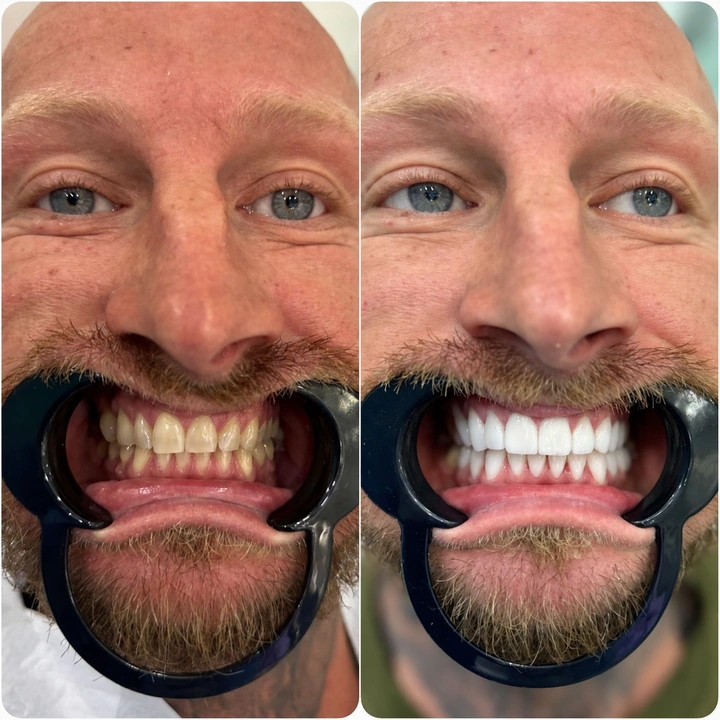
GOLDEN SMILE DENTSmile 09Zirconia crowns
Aesthetic choices explained before the final smile
This patient came to Golden Smile Dent for an aesthetic smile change and chose zirconia crowns. The appearance was planned around the patient’s preferences. This is another example of why the final smile should be discussed with the person who will wear it, rather than selected as a standard design.
Some patients with a similar starting concern may be suitable for E‑max laminate veneers or other more conservative care. That possibility depends on the natural teeth and bite. Similar-looking photographs do not establish that two patients need the same treatment.
The treatment story & what it explains
Shape and material are separate parts of the conversation
The shape you prefer is one part of the brief. The restoration that can deliver it appropriately is another. We explain the difference between a thin veneer on the front of a tooth and the fuller coverage of a crown, including the preparation involved.
Making the smile personal
We discuss which tooth shapes and shade the patient prefers, then relate those choices to the clinical plan. The appearance is reviewed during fitting, alongside the way the restorations sit in the mouth and meet the opposing teeth.
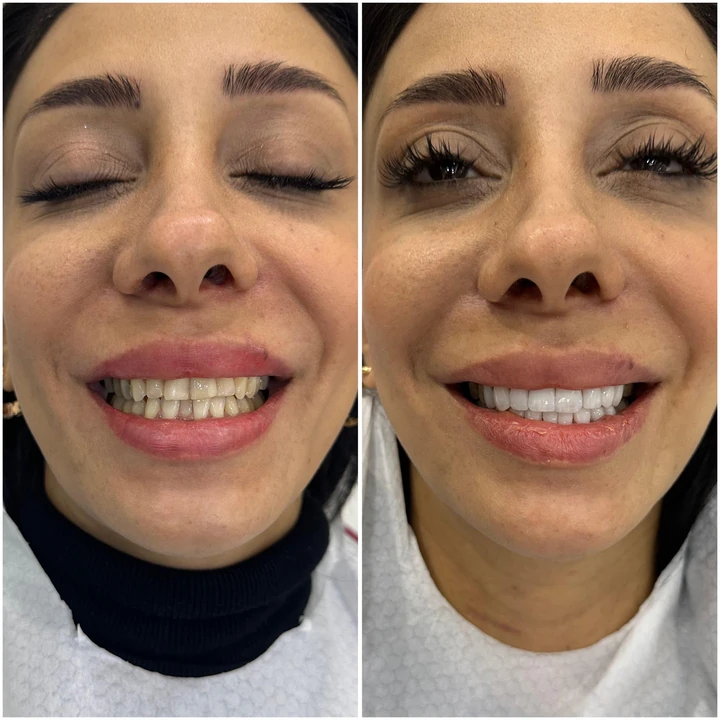
GOLDEN SMILE DENTSmile 10Zirconia crowns
Mild crowding and a colour the patient chose
Mild crowding was the starting concern for this patient. Our zirconia crown plan created the agreed external tooth shapes, with the final colour chosen by the patient. They were very happy with the completed smile.
The desired shade and the arrangement of the visible tooth surfaces were discussed as parts of the same plan. The result reflects this patient’s preferences; another person with a similar starting smile may want a different shape, colour or treatment approach.
The treatment story & what it explains
Why we look beyond the front view
A smile photograph is useful for starting a conversation about appearance. The clinical plan also considers the condition of the teeth, the bite and the amount of preparation that would be involved. These factors help determine whether restorative treatment is appropriate.
A photograph can help explain your preference
If you like this result, tell us whether it is the colour, the tooth proportions or the overall impression that appeals to you. That is more useful than asking for an identical copy. The next step is to translate the preference into a plan suited to your own mouth.
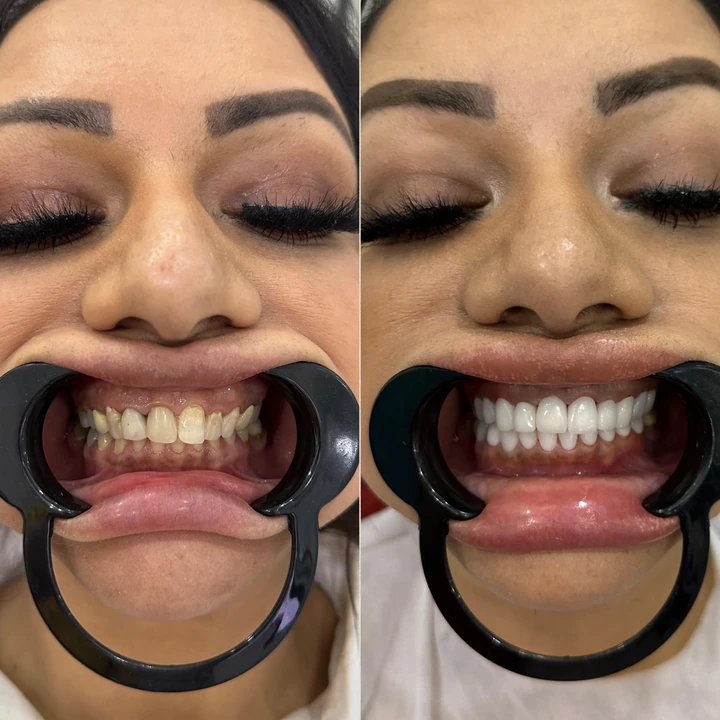
GOLDEN SMILE DENTSmile 1120 zirconia crowns
Twenty crowns, with healthy back teeth left uncovered
Our patient wanted a defined aesthetic treatment using 20 zirconia crowns. Healthy posterior teeth outside that agreed plan were left uncovered. Their natural colour can still be seen in the clinical photograph, where the cheeks are retracted to show more of the mouth.
That visible shade difference does not mean the back teeth were forgotten. The patient did not want the treatment extended to those healthy teeth. The scope of the work reflected the agreed smile goal and the teeth included in the plan.
The treatment story & what it explains
Why every visible tooth does not need a crown
A clinical photograph can reveal much more of the posterior teeth than an ordinary smile. A difference between natural tooth colour and the chosen ceramic shade is not, on its own, a reason to prepare additional healthy teeth. Tooth display varies between people and expressions.
Agreeing the scope matters as much as choosing the shade
Before treatment, the discussion should identify which teeth are included, which remain untreated, and how the two will look together. In this case the patient chose a 20-crown aesthetic plan. A different patient may need fewer restorations, a different treatment or no restorative work on particular teeth.
Maintaining both restored and natural teeth
The untreated teeth still need normal preventive care, while the crown margins and spaces between restorations need careful cleaning. Follow-up considers the whole mouth, including the teeth outside the original aesthetic plan.
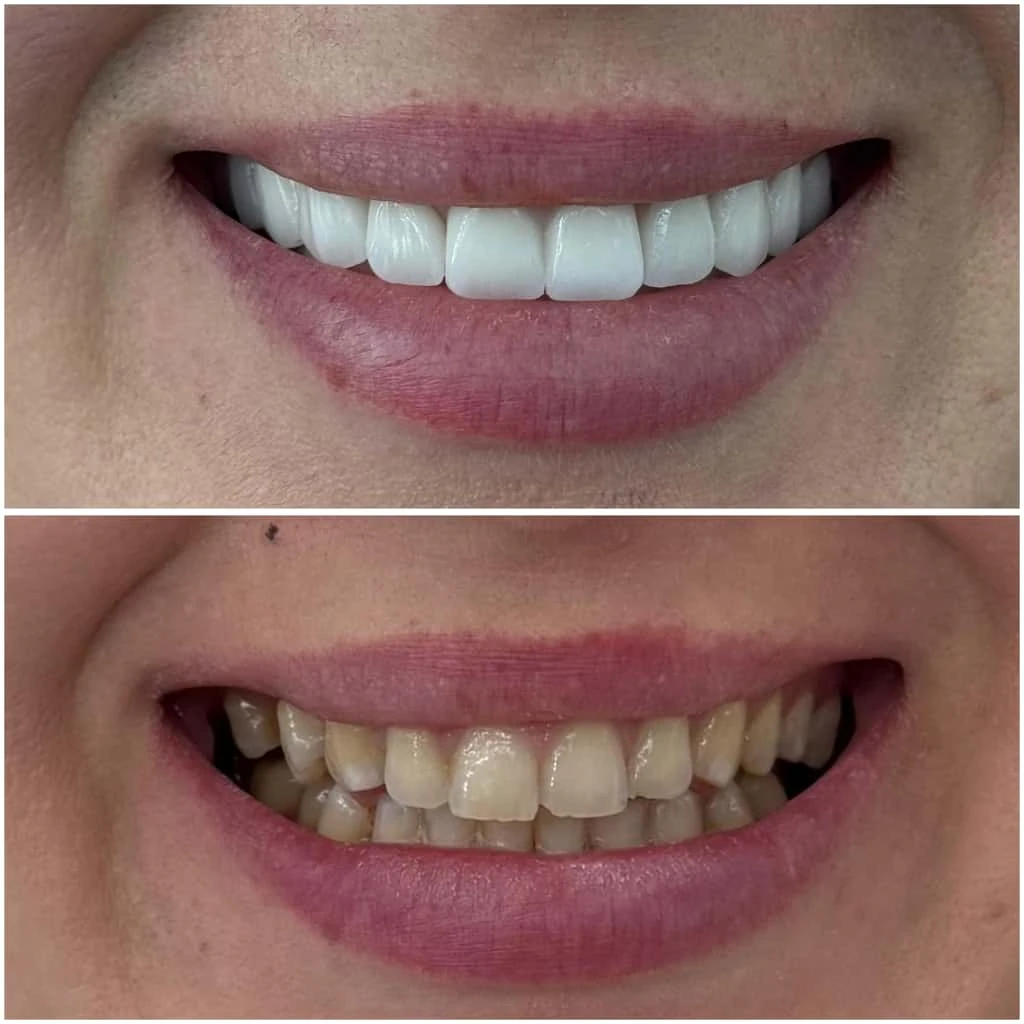
GOLDEN SMILE DENTSmile 12Zirconia crowns
A personal choice, with the alternatives explained
Our patient came to Golden Smile Dent wanting to change the appearance of their smile. The final treatment used zirconia crowns, with a result the patient was very pleased with. Their preference was an important part of the conversation, alongside the condition of the natural teeth and what each treatment would involve.
For suitable patients with a mainly aesthetic concern, E‑max laminate veneers are one of the options we consider first. This patient preferred the zirconia crown approach. A similar starting smile does not mean that another patient should automatically receive the same treatment.
The treatment story & what it explains
Veneers and crowns involve different decisions
A veneer covers mainly the visible front surface, whereas a crown surrounds a prepared tooth more fully. That difference matters when discussing how much tooth structure would be involved. We explain the proposed preparation and the alternatives before a patient commits to a treatment plan.
The preference becomes part of the design
The discussion is about the smile the patient wants to wear: how prominent the front teeth should look, how the shapes relate to the lips, and whether the overall impression should be subtle or more noticeable. Those preferences have to fit the clinical plan. This case illustrates a personal treatment choice, rather than a standard smile copied onto every patient.
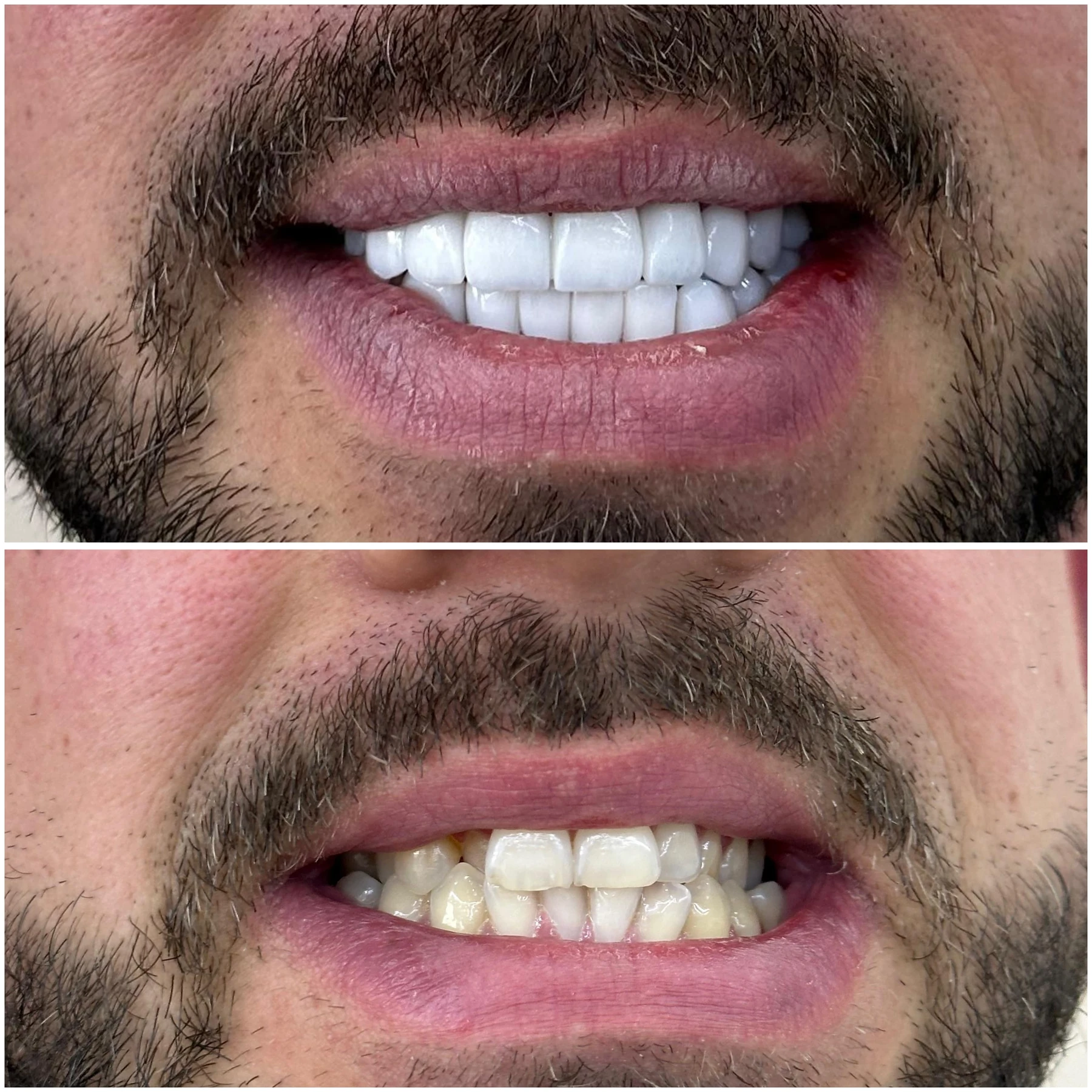
GOLDEN SMILE DENTSmile 13Zirconia crowns
Crowding, bite and a deliberately bright shade
This patient came to our clinic with concerns about crowded teeth and the way the teeth met. The zirconia crown treatment addressed the planned tooth shapes and contacts as well as the visible smile. The patient chose a shade close to a very bright white and was happy with that clear change in appearance.
The colour was a personal choice. A bright result was what this patient wanted; it is not a shade that we apply automatically to everyone. For another patient, the same conversation may lead to a softer white or a closer match to untreated teeth.
The treatment story & what it explains
Why the bite belongs in an aesthetic plan
A crown is used when eating and speaking as well as when smiling. Its length and contour need to work with the opposing teeth. The proposed appearance therefore has to be considered alongside contacts and the way the mouth closes, rather than judged from a front-facing photograph alone.
Reshaping and realignment are different
Restorations change the external shape of prepared teeth. Orthodontic treatment moves teeth and their roots. When crowding is present, we assess which approach is appropriate and explain whether alignment, restorative care or a combination is the better route. Crowding by itself is not a reason to crown every tooth.
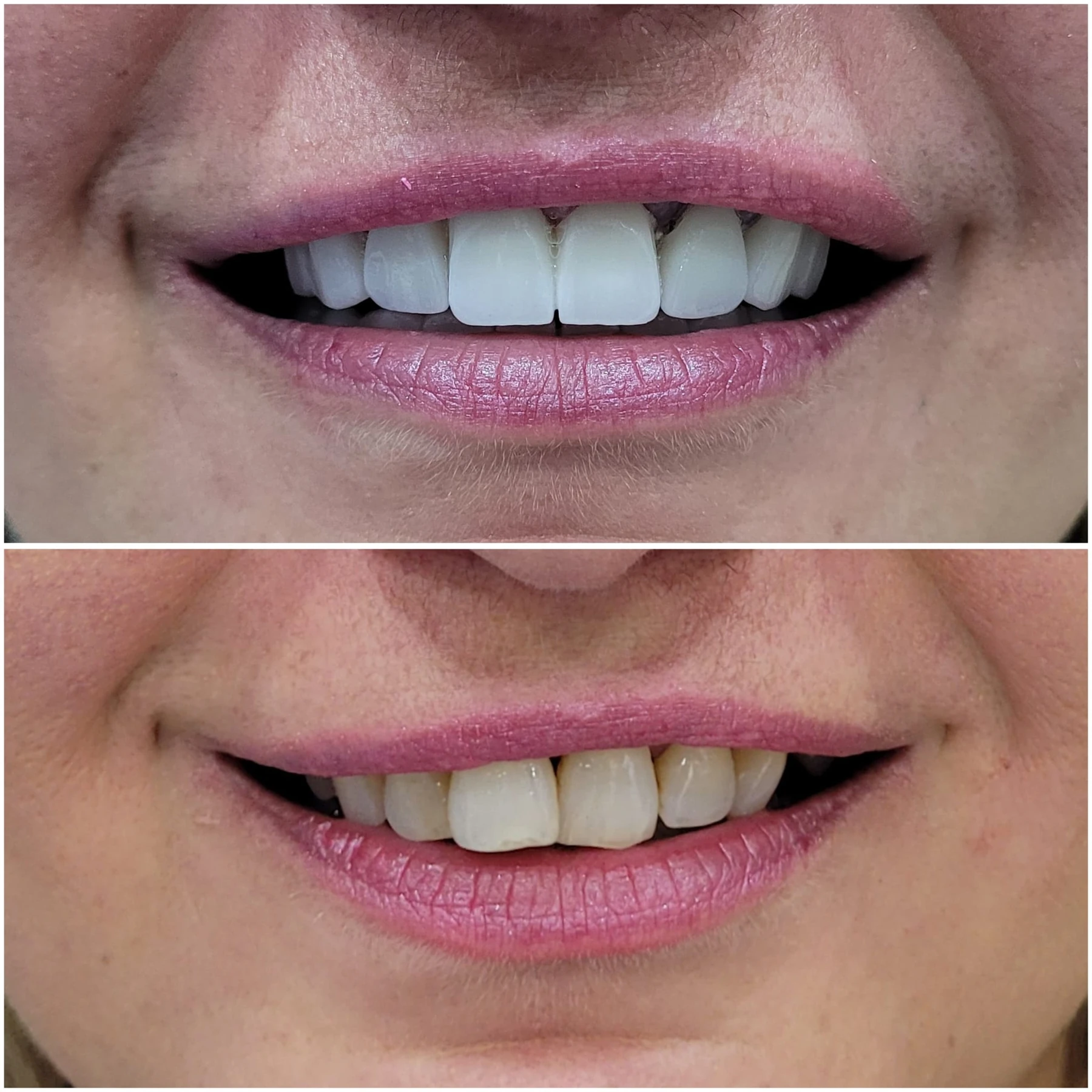
GOLDEN SMILE DENTSmile 14Zirconia crowns
Longer central incisors, exactly the character she wanted
Our patient wanted help with mild crowding and the proportions of her smile. She had a specific request: the two central front teeth should remain visibly longer than the neighbouring teeth. We incorporated that preference into her zirconia crown design, and she was very pleased with the finished appearance.
The aim was not to make every front tooth the same length. The longer central incisors were an intentional feature of this patient’s smile. Recording that preference matters because a tooth shape that feels right to one person may not be what another person wants.
The treatment story & what it explains
Small changes in length change the character of a smile
The central incisors sit at the visual centre of the smile. Their proportions influence whether the result feels softer, more prominent or more uniform. We discuss the shape the patient likes in relation to the surrounding teeth and the lip line.
Appearance still has to work in the mouth
A requested length must be assessed with the bite and the available space. Planning and fitting are where aesthetic preferences are checked against function. The goal is an agreed design that belongs to the individual patient, with instructions for cleaning and follow-up after the restorations are fitted.

GOLDEN SMILE DENTSmile 15Dental implants & zirconia restorations
From extensive tooth loss to eating and smiling again
Our patient had lost many teeth and had been struggling with eating, speaking and smiling. Diabetes was also an important part of the medical history. Before implant treatment began, blood glucose control had to be addressed. The treatment then progressed through implant placement and healing, followed by zirconia restorations.
After the healing phase and completion of the restorative work, the patient described being able to eat more comfortably and smile more freely again. The visible change was one part of the outcome; regaining everyday confidence and function was central to why they came to us.
The treatment story & what it explains
Why preparation came before the implant appointment
Poorly controlled diabetes can increase infection risk and delay wound healing. That makes medical history and glucose control relevant to implant planning. Diabetes does not automatically exclude someone from treatment, but readiness must be assessed individually, with medical coordination when necessary.
The smile was rebuilt in stages
In this case, the zirconia restorations followed a successful healing period. Implant placement and the final teeth were separate parts of the journey. The pace of treatment is set by the clinical findings and healing, rather than by a promise that every patient can finish on the same timetable.
Care continues after the final teeth
Keeping the tissues around the restorations clean and attending the recommended reviews remain important. Our international team is a point of contact after the patient returns home. A new symptom or concern should be discussed promptly so that the appropriate assessment can be arranged.
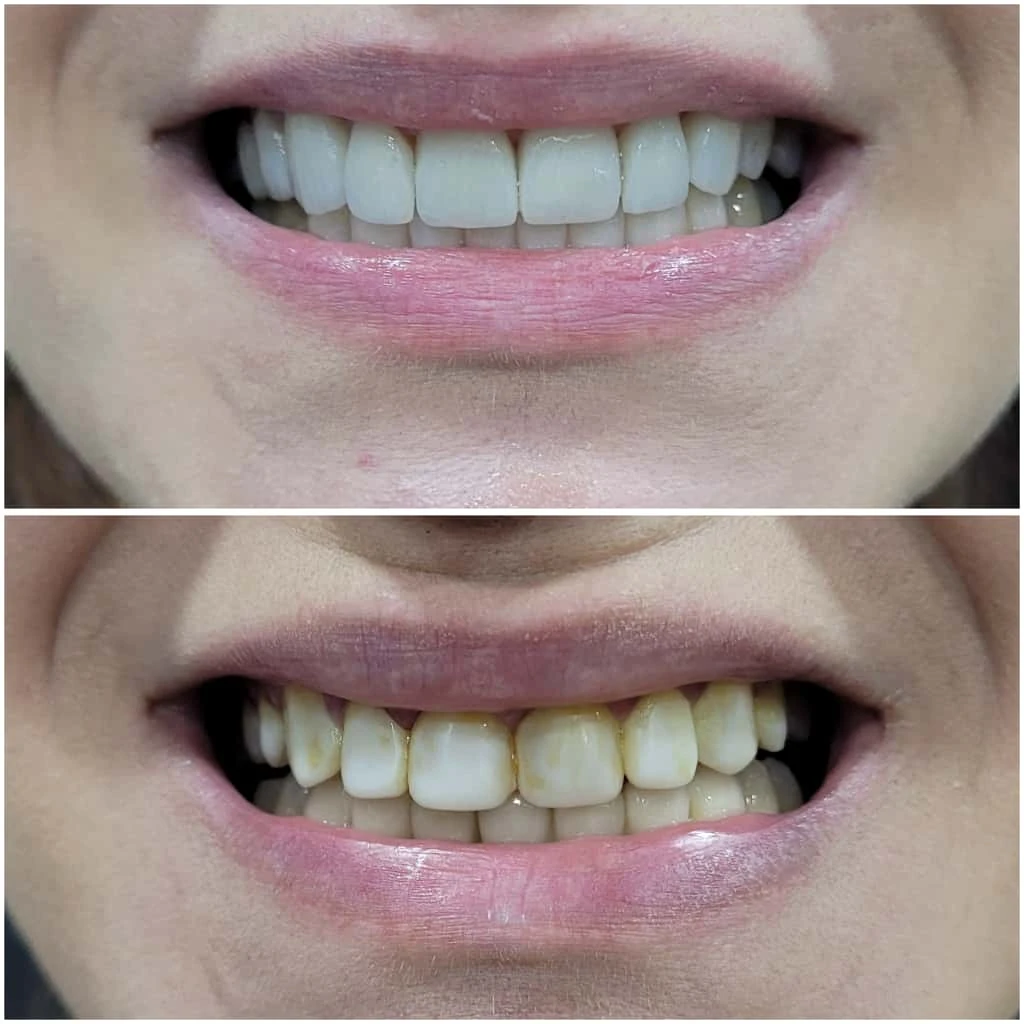
GOLDEN SMILE DENTSmile 16Zirconia crowns
The patient chose the colour and the direction of the smile
This patient visited Golden Smile Dent with an aesthetic concern and wanted a smile they felt happier showing. They chose zirconia crowns and took an active part in selecting the final colour. The finished appearance reflected that preference, and the patient was very pleased with the result.
For some patients with similar goals, E‑max laminate veneers may be a suitable option. We consider that possibility where the tooth structure, position and bite allow it. The choice is explained in terms of the restoration and preparation involved, not simply the name of the material.
The treatment story & what it explains
A natural-looking result is more than a shade number
Ceramic appearance depends on the material, thickness, surface finish and the tooth underneath. Some patients want a quiet, softer white; others want a more noticeable change. We discuss the desired effect in the context of the whole smile.
What this case can help you decide
You can use a case like this to describe what you like about the shape or colour. The next step is to assess your own teeth and explain which options can achieve your goal. A wish for whiter teeth alone does not establish that healthy teeth need full-coverage crowns.
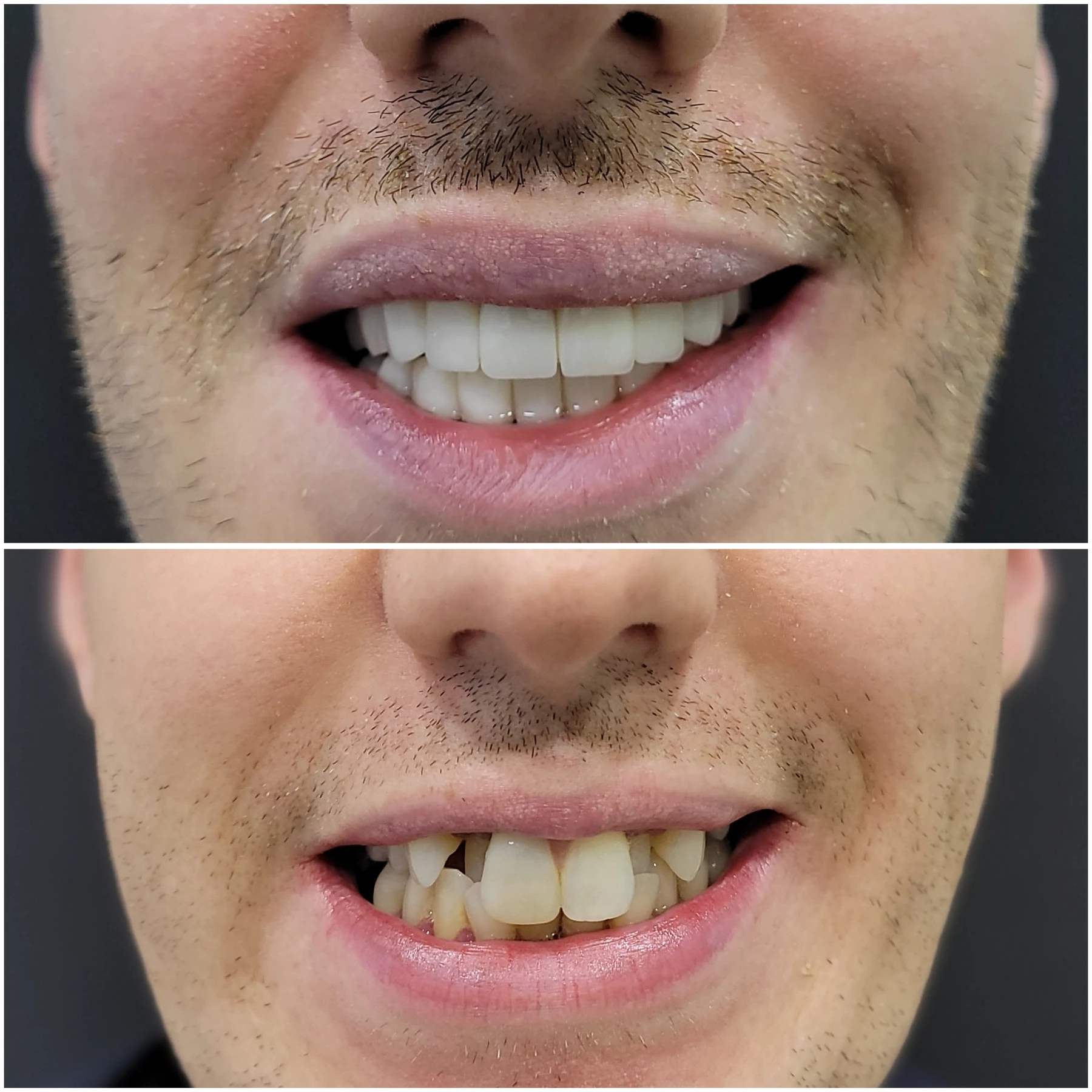
GOLDEN SMILE DENTSmile 17Zirconia restorative treatment
Rebuilding the balance around missing front teeth
Missing lateral front teeth, prominent canines and conspicuous central incisors had left this patient unhappy with the appearance of their smile. They were reluctant to show their teeth. Our zirconia restorative plan addressed the visible spaces and the proportions of the front teeth, in a shade the patient chose.
The patient was very happy to smile again after treatment. The change involved the relationship between several teeth: filling the visible gaps alone would not explain the overall appearance. The central teeth and canines also needed to be considered as part of the smile design.
The treatment story & what it explains
Why the whole front-tooth group matters
Central incisors, lateral incisors and canines have different shapes and roles in the smile. When a tooth is missing, the neighbouring proportions can become more noticeable. Planning looks at the group together, including how the proposed restorations meet the opposing teeth.
A missing tooth needs a support plan
The method used to support a replacement tooth must be assessed separately from its colour and shape. A smile photograph cannot establish whether a bridge, implant or another approach is suitable for someone else. We explain those choices after examining the available teeth, tissues and bite.
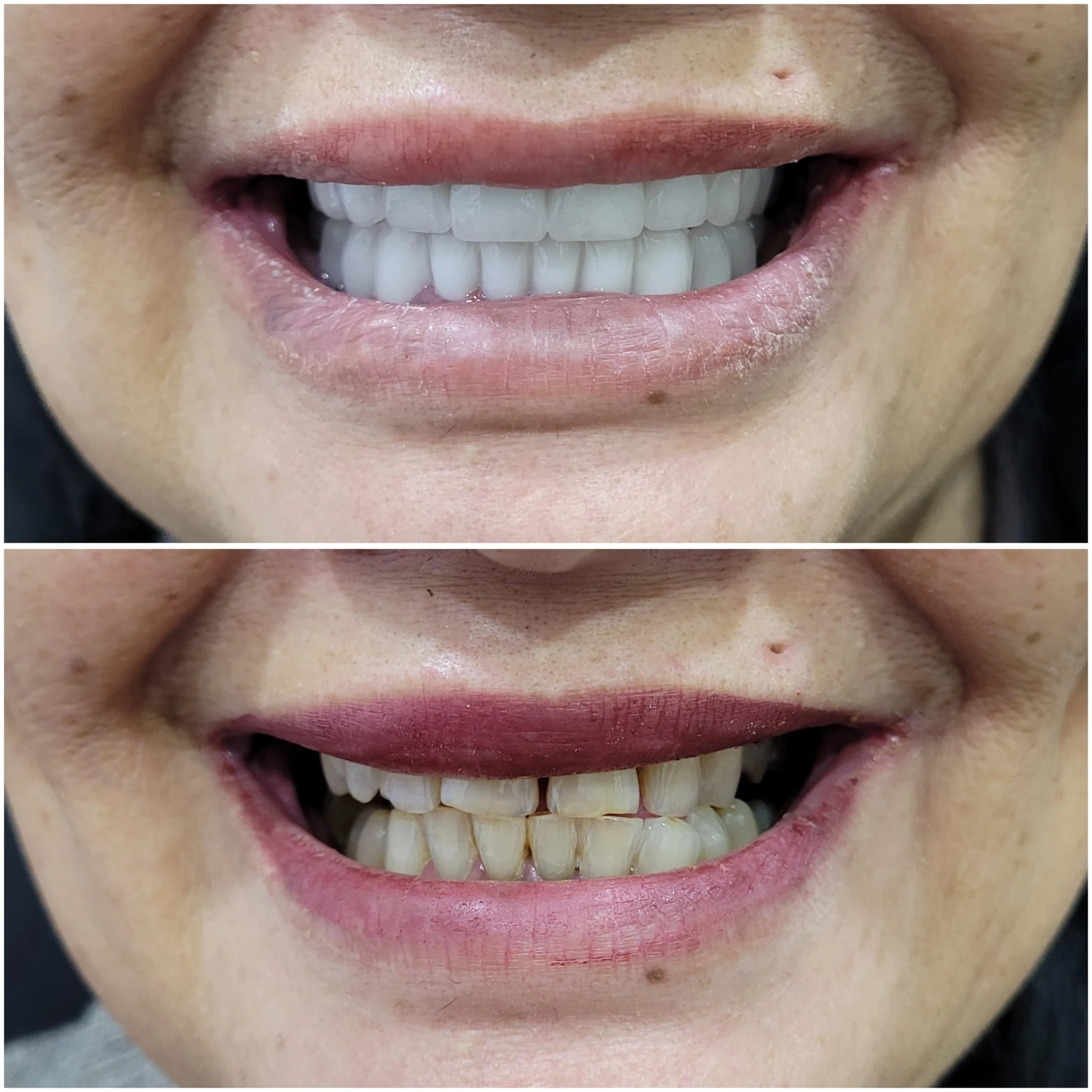
GOLDEN SMILE DENTSmile 18Zirconia crowns
An aesthetic change planned with the bite
This patient had mild crowding and concerns about their bite, which made smiling feel uncomfortable. We used zirconia crowns to create the agreed restorative shapes and contacts. The final shade was selected by the patient, who was pleased with the finished smile.
The intention was to consider appearance and function together. A more even-looking smile should still be evaluated as part of a mouth that needs to close, chew and move comfortably.
The treatment story & what it explains
Why the fitting stage matters
Front-facing photographs show the visible smile, but they do not show every contact between upper and lower teeth. During restorative care, the fit and bite need to be checked in the mouth. If a contact feels too high or different afterwards, it deserves a review rather than being ignored.
Keeping the result comfortable
Daily cleaning around the crown margins and between teeth supports the surrounding tissues. Patients should continue the reviews recommended for their situation and contact the team about a new bite change, discomfort or looseness. A successful completion appointment is the beginning of maintaining the restorations.
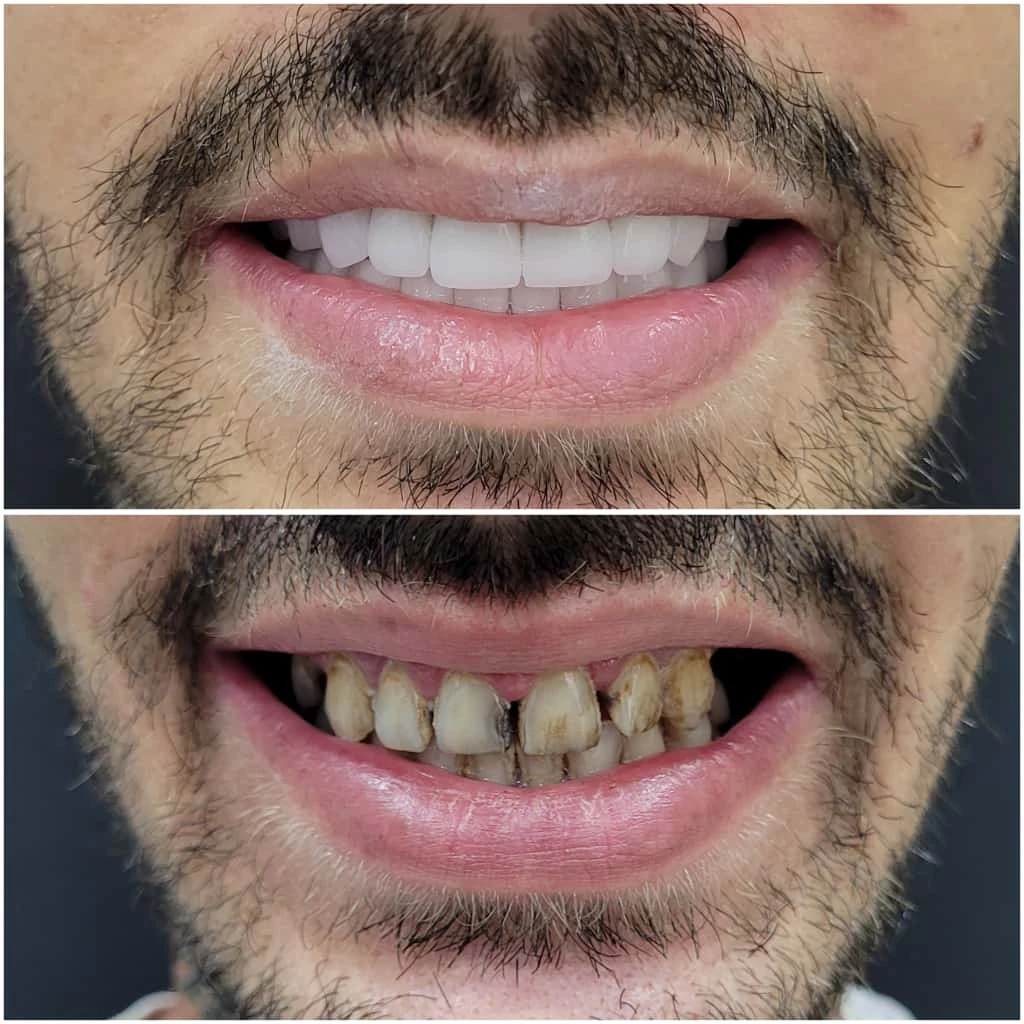
GOLDEN SMILE DENTSmile 19Root canal treatment & zirconia crowns
Treating the teeth underneath the smile first
Our patient’s treatment began with extensive decay inside the teeth. Teeth that required root canal treatment were treated before the zirconia crowns were completed. The patient selected the final shade and was very pleased with the restored smile.
This case was about more than covering the visible surfaces. The underlying dental problems had to be addressed before the aesthetic finish. A bright crown alone cannot resolve disease inside a tooth.
The treatment story & what it explains
Two treatments with different purposes
Root canal treatment addresses inflamed or infected pulp inside the tooth. The canals are cleaned, disinfected, filled and sealed. The restoration then provides the planned outer form and protection. The internal treatment and the final crown are connected stages, but they do different jobs.
Why root canals are assessed tooth by tooth
A crown does not automatically mean that a tooth needs root canal treatment. The decision depends on the condition of the pulp and the tooth, informed by clinical assessment. We explain which teeth need that care and why, instead of adding the same procedure to every tooth in a smile plan.
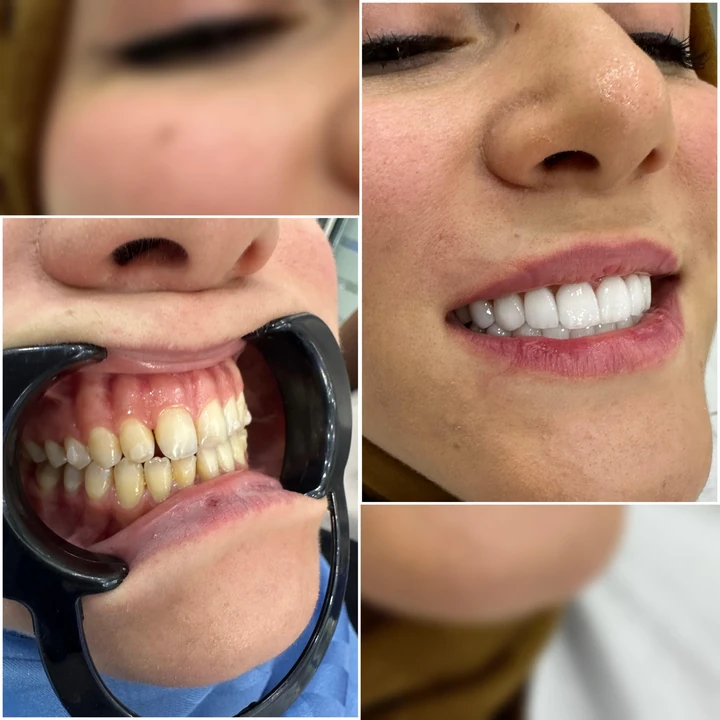
GOLDEN SMILE DENTSmile 20Zirconia crowns
Closing the spaces while planning the tooth proportions
This patient came to us with spaces between the teeth. Zirconia crowns were used to close the visible gaps within the agreed restorative plan. The completed tooth shapes created a more continuous smile, and the patient was very pleased with the result.
Closing a space is not only a matter of adding width. The proportions of neighbouring teeth and the way they meet need to be considered together, so the final shapes work as a group.
The treatment story & what it explains
Aftercare should match the reason for the spacing
Teeth can change position over time, and the appropriate follow-up depends on the underlying situation. The dentist assesses whether an appliance is needed and explains what it is intended to do. A single rule for every patient with gaps would miss those individual differences.
A retainer and a night guard do different jobs
A retainer is used to maintain tooth position, especially after orthodontic treatment. A night guard primarily protects teeth and restorations against grinding or clenching. Neither is a universal guarantee that spaces can never return. If an appliance is prescribed, use and review it according to your dentist’s instructions.
Reading these two views
The before photograph uses cheek retractors for a wider clinical view; the after photograph shows a smile. Both are this patient, but the lip positions and amount of visible tooth are different. The comparison shows the planned change in the visible spaces and tooth contours.
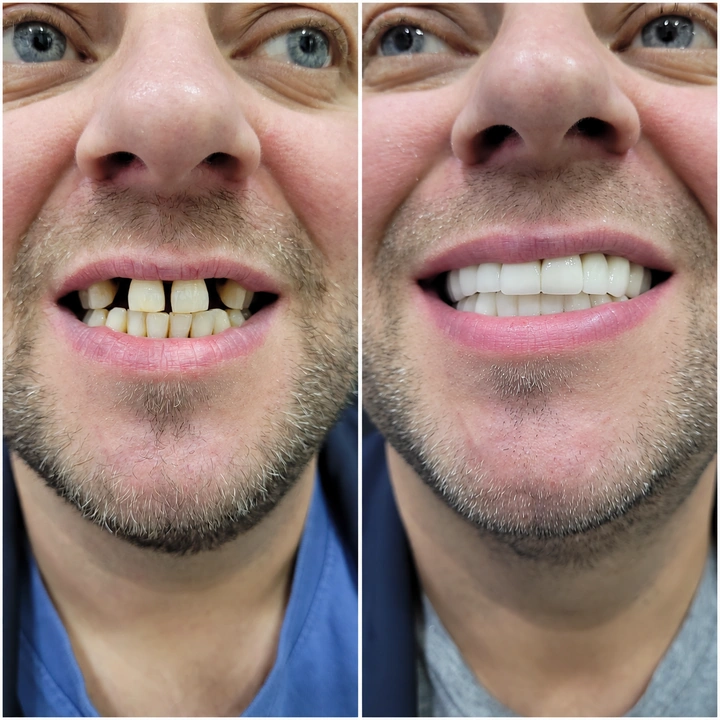
GOLDEN SMILE DENTSmile 21Before & immediately after treatment
The first smile at the completion appointment
This pair shows the same Golden Smile Dent patient before treatment and at the completion appointment. It captures the first view of the finished smile, before the patient left the clinic.
The completion appointment also includes a review of the treatment and an explanation of care at home. Our team remains available for questions after the patient leaves the clinic.
The treatment story & what it explains
The final appointment is also a conversation
We want patients to tell us how the teeth feel as well as what they think of the appearance. Fit, bite and comfort are reviewed in the mouth. Before departure, the patient receives care instructions and knows how to reach the team if something feels different afterwards.
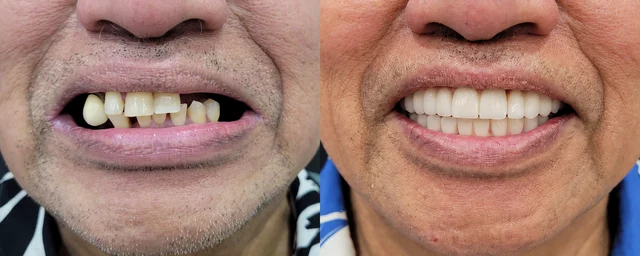
GOLDEN SMILE DENTSmile 22All-on-6
Danny’s All-on-6 smile, from the first visit to the final result
Danny came to Golden Smile Dent for All-on-6 treatment. His starting smile and his completed result are shown together here. The treatment rebuilt his smile using a full-arch restoration supported by implants.
The visible teeth are the final stage of a plan that also includes implant placement, healing and fitting. We explain that sequence before treatment, so you know what happens during each visit and how to look after your mouth between them.
The treatment story & what it explains
What All-on-6 means
Six implants support a full arch of replacement teeth. The position of those implants and the design of the teeth are planned together. Dt. Ceylan Ergül’s 27+ years of professional experience guide individual treatment planning, alongside the examination and the work of your treating team.
The time between visits
A staged implant plan allows time for the implants to integrate with the bone. Around three months is a common planning point; your dentist confirms the interval and checks healing before the final teeth are made. Temporary teeth can be provided when clinically suitable, with instructions on what to eat and how to keep them clean.
Preparing the finished smile
Once healing is confirmed, healing caps can help shape the gum around the implant connections. Scans or impressions and bite records guide the final restoration. We review the shape and shade with you, then check the fit, bite and cleaning access before the teeth are secured.
Each pair shows the same patient. Lighting, angles and treatment stages vary; every treatment and result is individual.
WHEN YOU’RE READY
You can ask us directly.
A WhatsApp message is all it takes to start. We’ll answer your questions, explain the options and help organise your visit. The initial conversation is free; take the time you need to decide.