
AESTHETIC DENTISTRY
E‑max veneers vs zirconium crowns: which fits your teeth?
Compare preparation, coverage, translucency and bite considerations, with real Golden Smile Dent cases showing how individual choices shape treatment.
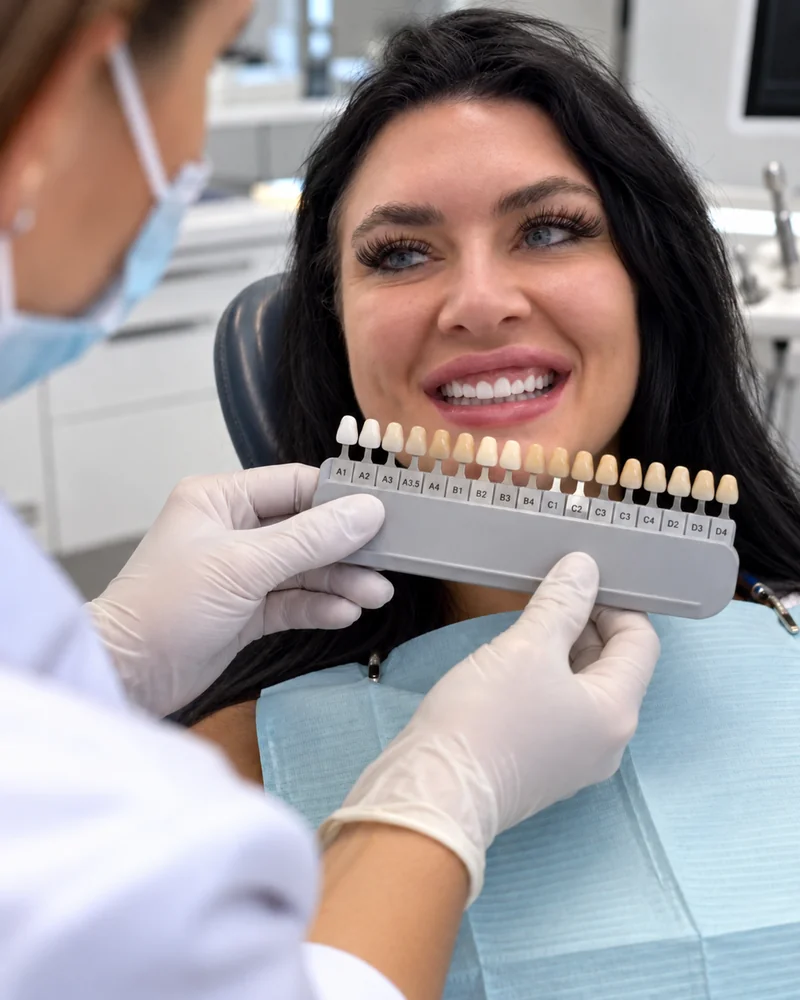
Start with the restoration, as well as the material
An E‑max laminate veneer is a thin facing, usually bonded to the visible front of a tooth. A zirconia crown covers the prepared tooth more fully. That difference affects how much natural tooth is involved.
“E‑max” names a product family; “veneer” describes the restoration. Here we compare lithium-disilicate E‑max veneers with zirconia crowns, often searched for as zirconium crowns. An E‑max crown is a different restoration from an E‑max laminate veneer.
E‑max veneers and zirconia crowns at a glance
| What matters | E‑max laminate veneers | Zirconia crowns |
|---|---|---|
| Coverage | Mainly the visible front surface. | Fuller coverage around the prepared tooth. |
| Preparation | May be minimal in suitable teeth; no-prep is not appropriate for everyone. | Usually involves more extensive tooth shaping. |
| Appearance | Lithium disilicate comes in different shades and translucencies. | Appearance varies with zirconia type, design and finishing. |
| Clinical purpose | Selected aesthetic changes where bonding and bite allow. | Coverage and restoration where the tooth’s condition justifies it. |
| Personal preference | Shape, shade and length discussed with you. | Shape, shade and length discussed with you. |
When veneers can be a more conservative choice
For an aesthetic change, we consider whether the goal can be achieved while preserving more natural tooth. Veneers may suit selected front teeth with the right tooth structure, alignment and bite. Whitening, bonding, orthodontics or leaving healthy teeth untreated may also be options.
No-prep veneers are suitable only where adding material can produce an appropriate shape and fit. Other cases require some preparation. Removing tooth tissue is irreversible, so the proposed amount and reasons should be explained before treatment.
Smile 07 shows orthodontic treatment followed by E‑max laminate veneers. The before image includes the braces stage. Alignment and the later veneer finish were separate parts of this patient’s journey.
Why a crown may be recommended instead
A damaged or heavily restored tooth may need a different approach from an intact tooth with an aesthetic concern. A crown can provide coverage when clinically justified. Decay, existing restorations, remaining tooth structure and the bite all matter.
A wish for whiter teeth does not automatically justify preparing healthy teeth for crowns. We explain the reason for each proposed restoration. In Smile 11, the patient chose 20 zirconia crowns; healthy posterior teeth outside the agreed plan remained uncovered.
Translucency, colour and a natural-looking result
Translucency describes how light passes through a material. Lithium-disilicate E‑max offers different translucencies and shades. The chosen ceramic, its thickness and the underlying tooth influence the appearance.
Zirconia is not a single uniform-looking material either. Modern zirconia systems offer different optical properties. It is inaccurate to say all zirconia looks artificial or all E‑max looks identical to natural teeth. Material choice and laboratory design both matter.
Some patients want a soft, natural-looking white; others prefer a noticeably brighter smile. We discuss colour alongside tooth shape, lip line and untreated teeth, then review the proposed appearance with you.
Crowding and open bite need their own assessment
Crowns and veneers change tooth shape. Orthodontics moves teeth and their roots. Covering a tooth is therefore not the same as correcting its underlying position; crowding alone does not establish that crowns are appropriate.
In Smile 01, the clinic used an individual restorative approach to an open-bite concern. The jaw bones were not moved. This is dental camouflage in a particular case, not proof that every open bite can be treated without orthodontics or jaw surgery.
Aftercare: retention and protection are different
Keep teeth and gums clean and attend the reviews recommended by your dentist. Restorations and their supporting teeth can need maintenance, repair or replacement. Tell the team about a new bite change, pain, looseness or gum concern.
A retainer helps maintain tooth position, particularly after orthodontics. A night guard primarily protects teeth and restorations from grinding or clenching. Your dentist decides whether either is needed and how to use it; neither guarantees that spacing can never recur.
Your preference becomes part of a clinical plan
Bring examples of the shape and shade you like. We will discuss which teeth need care, preparation, alternatives, fitting stages and aftercare. Photographs can start that conversation; they cannot settle suitability by themselves.
Dt. Ceylan Ergül’s 27+ years of professional experience inform our approach to personalised planning. Read our E‑max veneer guide and zirconia crown guide, or contact our team to begin your assessment.

THE TEAM BEHIND YOUR CARE
Dt. Ceylan Ergül
Implant treatment and aesthetic smile planning, including E‑max veneers, zirconia crowns and composite bonding.
View the dentist’s profileWritten by the Golden Smile Dent editorial team. General information to support your conversation with the dentist.
This guide helps you prepare questions. Your own treatment decisions require an individual clinical assessment.
Explore the related treatmentKEEP READING
More articles.
 GOLDEN SMILE DENT
What to ask about E‑max before choosing veneers.
Look beyond the material name to the restoration, documentation and plan.
Read article → GOLDEN SMILE DENT
Before you book: a practical dental travel checklist.
The documents, questions and arrangements that make a treatment journey clearer.
Read article → OUR IMPLANT PATIENT
Why an implant plan may involve more than one visit.
The difference between the implant, the healing period and your final teeth.
Read article →WHEN YOU’RE READY
You can ask us directly.
A WhatsApp message is all it takes to start. We’ll answer your questions, explain the options and help organise your visit. The initial conversation is free; take the time you need to decide.